
Project Avalanche: A Farmer-Led Community Science Cohort
Regenerative farming, a philosophy that bolsters soil health, encourages biodiversity, and builds resilience in local ecosystems, is the latest buzzword in climate conferences and sustainable farming circles. The benefits are clear to those who are practicing these farming principles - the soil is healthier, with more resilience in drought and flood conditions; the habitat is more stable, with increased biodiversity; crops require less external inputs to produce nutrient-dense food.
We’ve been practicing regenerative farming techniques for several years now, but the reality is that farms like ours are the exception, not the rule. Most farm operations in the US still practice conventional agriculture, relying on monocrops, chemical fertilizers and pesticides, and heavily tilling soil. Estimates suggest that less than 5% of farms are regenerative. To get that number higher, more hard data is needed to show the outcomes that regenerative farming offers. Farmers can speak to the benefits anecdotally, but quantitative numbers will grease the wheels for wide-scale adoption (and help unlock funding it requires).
Enter Ecdysis. This non-profit research foundation, made up of a team of scientist-farmers, has, since 2022, been collecting the on-farm data to tell the story of regenerative outcomes at scale. Spurred by a grant from the Rockefeller Foundation, they launched the 1000 Farms Initiative to deploy teams to farms across North America to collect and analyze biometrics of agriculture systems. To date, they’ve sampled at more than 1,700 farms.
This is way more than a simple soil test. The 1000 Farms grower report (see sample), provided to the farmer at the end of the sampling and testing process, includes metrics on soil health, water, plant cover and biodiversity, microbe communities, and bird abundance - all of which tell a story about how farming practices impact the environment. The report also compares each farm’s data to other farms in the region.
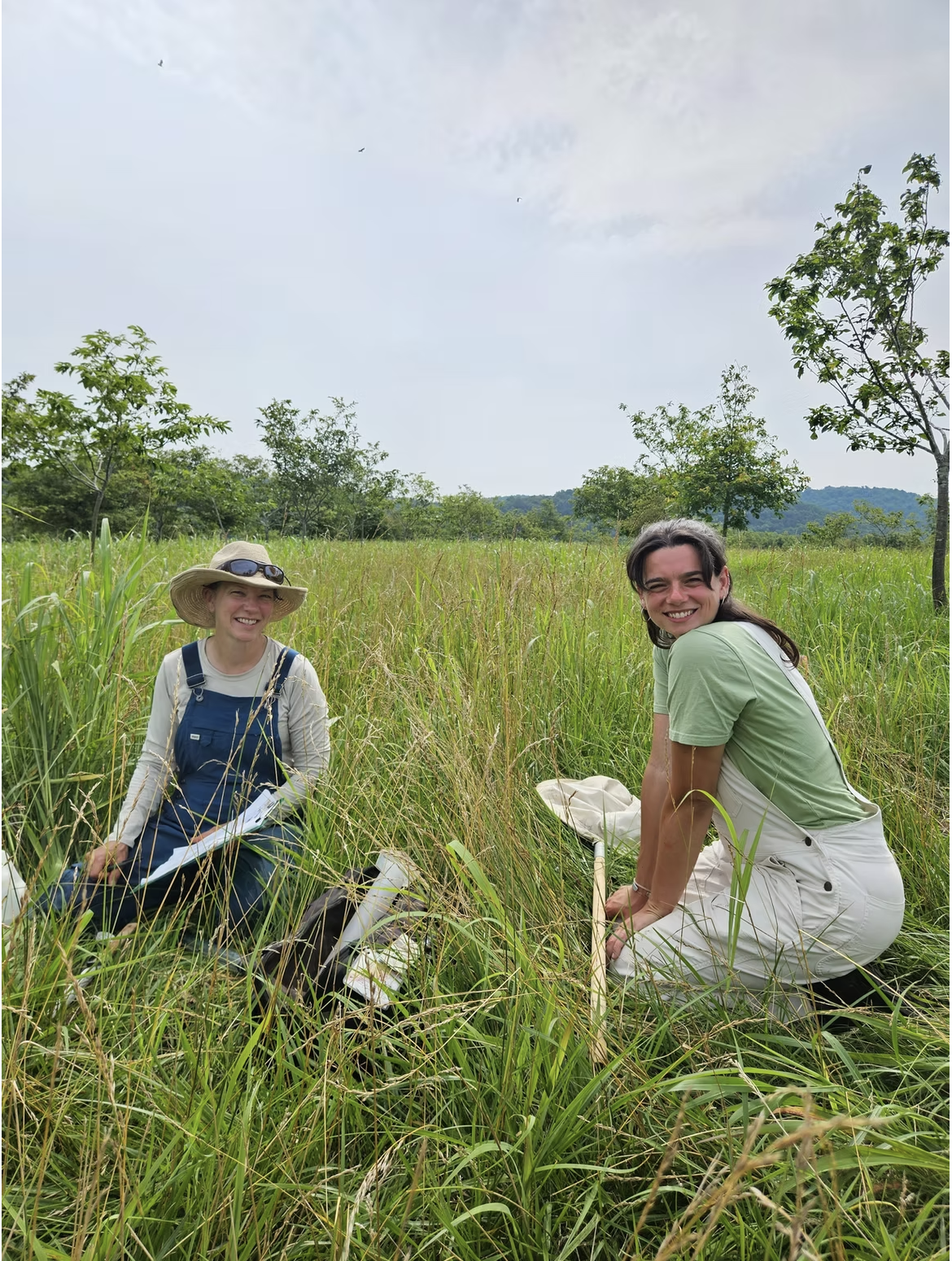
To expand this massive data collection process to even more farms, they’re launching a new phase this year: Project Avalanche. Project Avalanche brings farmers in a region together and trains them to measure and observe what’s happening on their own land. The idea is to create cohorts of farmers that can engage in their own data collection. In a community field day, an Ecdysis project manager will provide farmers with the tools and training to conduct the sampling. Then participating farmers will head back to their farms and take their own samples to ship back to the Ecdysis lab. At the completion of the process, they’ll receive a comprehensive grower report of all their data free of charge.
Now the exciting news: Burkett Farm is teaming up with Ecdysis to host a Triangle-area Project Avalanche cohort. We are seeking farms that would like to participate.
What Participating Farmers Do
Growing Season:
Attend a training field day on June 23 to learn about Ecdysis research from visiting over 1700 farms, how to collect samples on your farm, and meet others in the community science cohort.
Between June 29th to July 12th: Use the methods learned at field day to collect samples and data on your farm.
By July 13th: Bring samples to Burkett Farm to be mailed back to Ecdysis for testing.
Harvest Season:
Mail Ecdysis a crop sample from the tested field for nutrient analysis.
Winter/Dormant Season:
Answer an end-of-season, 30 min survey on management practices. This helps Ecdysis contextualize the data and make it more useful for farmers and the community cohort.
Attend a Winter Field Day where farmers and Ecdysis staff review the data together, look at trends in the region, and discuss next steps for the coming season.
Participating Farm Criteria
For this cohort we are looking for farm participants that meet the following criteria.
Located within 70 miles of Raleigh, NC
Can commit to attending the field day and sampling in the window of dates above
Minimum of .5 acre under cultivation
Production focused on one (or more) of the following: diversified vegetables; pastured pork or poultry; muscadine grapes
Is practicing at least one of the following regenerative farming principles: cover cropping, rotational grazing, no or low till, elimination of synthetic chemicals, increasing biodiversity in the system.
We invite interested farmers to submit an inquiry here.