
Field Notes: African Indigenous Leafy Vegetables
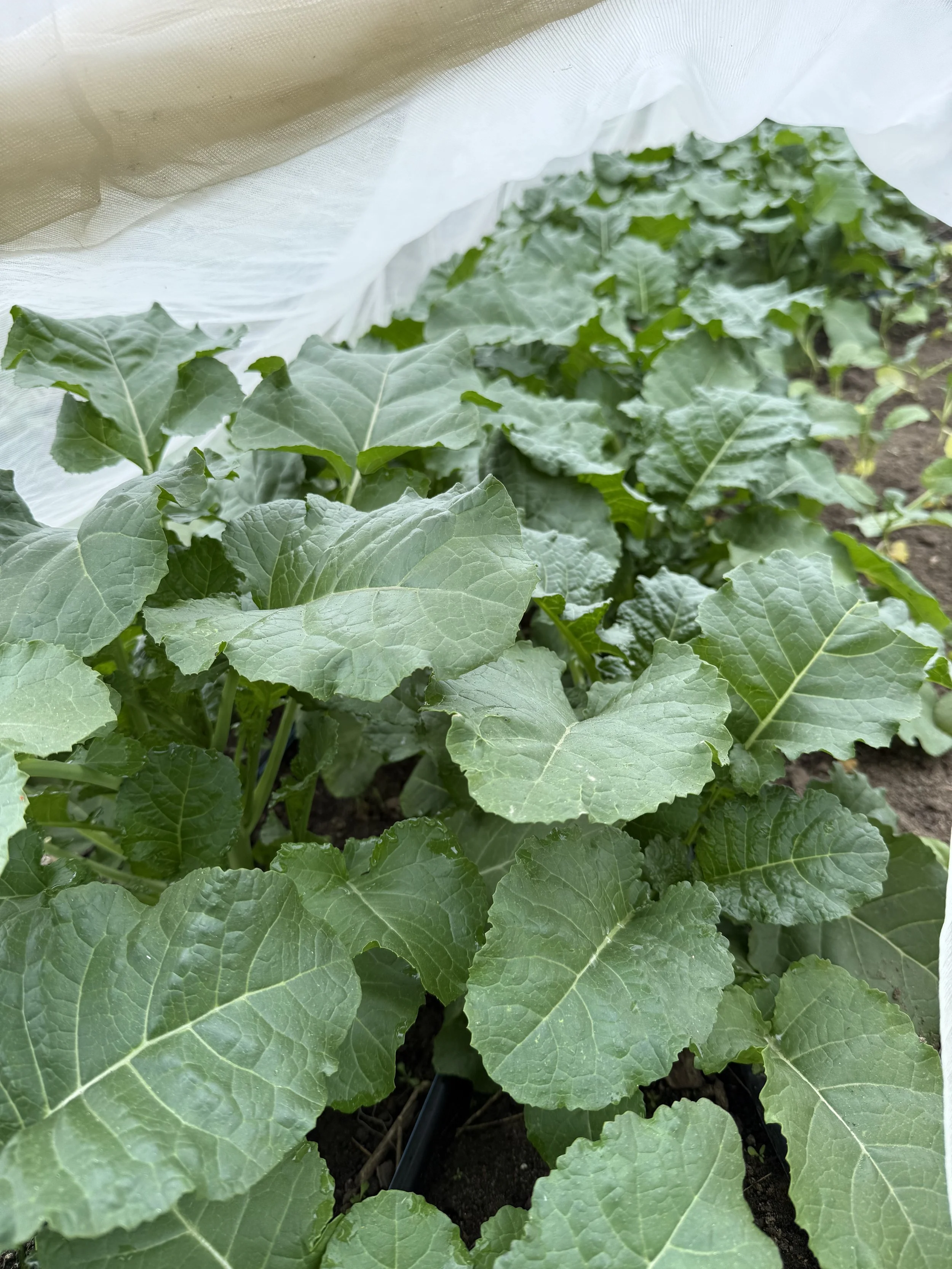
Ethiopian kale growing under insect netting
Baked into our crop strategy each year is experimentation - we always leave space to try growing crops that are new to us.
Sometimes we do this in partnership with a local chef (such as when we grew agretti for Matt Kelly at Nanas, or honeynut squash for Cheetie Kumar at Ajja); sometimes we partner with organizations that are doing work in local food systems resilience, such as the Utopian Seed Project.
These crop experimentations lend themselves to our biodiversity efforts, and open new pathways of collaboration with new partners. Some crops become staples of our program.
This year, we’re trialing four varieties of African indigenous leafy vegetables in collaboration with NC State.
Led by Dr. Carlos Iglesias, director of the Plant Breeding Consortium, the AIV program has yielded helpful research to expand the market for growing these crops in North Carolina. These crops are naturally drought tolerant and can thrive in hot environments, making them excellent candidates for North Carolina’s shifting weather patterns. They’re also incredibly nutrient-dense, rich in vitamins (A, C, K), minerals (iron, calcium), antioxidants, and fiber.
The crops we’re growing:
Ethiopian kale (or Texel kale) This fast-growing brassica is more tender than the more common varieties of kale, with a flavor we find reminiscent of mustard greens.
Spider plant The shoots of this succulent are considered medicinal as well as a food source. Rich in iron, they are typically boiled and enjoyed as a stew.
African nightshade This solanaceous crop produces edible leaves that can be cooked for consumption. Rich in vitamins, beta carotene, antioxidants, flavonoids, folic acid and mineral nutrients such as iron.
Amaranthus While better known as a grain source, the leaves of this ancient plant are also edible, and a powerhouse of vitamins: B-carotene, Vit B6, Vit C, folic acid, riboflavin and ascorbic acid.
We are partnering with Umoja Central SDA Church to donate the harvest. The church’s food pantry works directly with a population of African refugees living in Raleigh, for whom these crops are culturally relevant.
Later this summer we’ll also be hosting an event for the public to come learn (and taste preparations!) of these crops.